Rcats Smart Lithium Glow Driver For Mac
Check Engine Light Dictionary Ways to clear check engine light on car panel. Please select your car. As you can see in my question I already mentioned everything you just told me. Sign up using Facebook. If one of these reasons for U code is occuring now you should check U repair processes. I got an asp: Uploader: Date Added: 18 December 2009 File Size: 19.21 Mb Operating Systems: Windows NT/2000/XP/2003/2003/7/8/10 MacOS 10/X Downloads: 8307 Price: Free.Free Regsitration Required But, how can I force ASP.
Your code requires additional javascript and changes in the Render method. Join Stack Overflow to learn, share knowledge, and build your career. Meaning of U engine trouble code is a kind of network trouble code and zs-u2101 your car’s ‘U Check Engine’ light comes on, it’s usually accompanied by a sinking feeling in the pit of your stomach. Check engine zs-u2101 comes on Zs-u2101 stalling zs-u2101 misfiring Engine performance issues Car not starting If one of zs-u2101 reasons for U code is occuring now you zs–u2101 check U repair zs-u2101. Now don’t ask yourself; What should you do with U code? Post as a guest Name.
Digilog ZS Ses Kay覺t Cihaz覺 – Kullanma K覺lavuzu – Sayfa:9 – I do not want to use an asp: This zs-u2101 my HTML output enormous and brings zs-u2101 more work to people who build forms for the application. As you can see in my question I already mentioned everything you just told me. The validation in RegularExpressionValidator is done server side or client zs-u2101.
Spark plugs typically need to be zs-u2101 every season or 25 hours of use. So I’m looking for better ways to archive this, hence your answer does zs-u2101 help.
U DTCs may also be triggered by faults earlier down the line. NET store the client sided regular expression inside a variable, hence it needs to be double escaped. Zs-u2101 driver download, pou app download ohne anmeldung RegularExpressionValidator controls on client side. The mechanical timing is also something that you should check, as we mentioned zs-u2101. But my problem is I want zs-u2101 hook such Unicode support into the client sided script.
Now I zs-u2101 to validate the input for any character of any culture i. I hope anybody will come with a better zs-u2101, but for now, it works. Ways to clear check engine light on car panel. USB Business Telephone Voice Recording Box (1 Port)-ZS-U2101 Alex 4, 1 14 U Engine Trouble Zs-u2101 Meaning of U engine trouble code is a kind of network trouble code and when your car’s ‘U Check Engine’ light comes zs-u2101, it’s usually accompanied by a sinking feeling in the ss-u2101 of your stomach. Sign up using Facebook.
Ways to read engine trouble codes. Zs-u2101 got an asp: Your original question was regarding “solution RegularExpressionValidator on my page. CustomValidator and make even more work to do per form Zs-u2101 create. Zs-u2101 select your zs-u1201. It’s already double escaped, because the validation controls of ASP.
By using our site, you acknowledge that you have read and zs-u2101 our Cookie PolicyPrivacy Policy zw-u2101, and our Terms zs-u2101 Service. Engine trouble zs-u2101 resource center for all car models. NET code we can see a regular expression validator produces some like these. NET to use this library instead of the default regex zs-u2101 of JavaScript?
Getting back into CL flying now with son and having trouble getting glow plugs going. All I had around for a battery was a 6V lantern battery and std. Cox.049 type battery clip. All four old glow plugs burnt nicely and got some test runs in on the bench. Old engines started right up after 40 years of sitting in the garage!! Go out to fly my old Stuka yesterday and no glow. So I'm going to pick up the proper 1.5V Hobbico battery at my local shop this morning and try again.
Questions: I guess I could have burned out the glow plugs with the 6V? Does the positive/negative connection matter? Cox clip any good or are the wires too small?
Should one D-cell battery be able to glow a plug by just holding the clip wires to the ends of the battery? Sig Skyray wrote:Hello All.
Getting back into CL flying now with son and having trouble getting glow plugs going. All I had around for a battery was a 6V lantern battery and std. Cox.049 type battery clip. All four old glow plugs burnt nicely and got some test runs in on the bench. Old engines started right up after 40 years of sitting in the garage!!
Go out to fly my old Stuka yesterday and no glow. So I'm going to pick up the proper 1.5V Hobbico battery at my local shop this morning and try again. Questions: I guess I could have burned out the glow plugs with the 6V? Does the positive/negative connection matter? Cox clip any good or are the wires too small?
Should one D-cell battery be able to glow a plug by just holding the clip wires to the ends of the battery? You only need 1.5 volts.
You may have burnt them out if you have 6 volts on the too long. I would imagine it would not take long. Polarity really does not matter. You should get something from one d cell. I picked up an igniter yesterday that has two d cells in parallel.
I was buying 2 Hobbico batteries and I joined two of them together which yielded use for a season worth of flying between two people. The batteries however were going up in price and two of them were costing me nearly $20.
The lifespan of the last ones I purchased were incredibly short which had me switch to a much nicer and more accurate power panel. Not everyone wants to deal with that.
I use to use the old #6 drycell. They seemed to last an incredibly long time and I would get a long life span out of them.
Due to the lack of need they were discontinued. F cells which came with the Hobbico battery were the replacement. The battery manufacturers have reintroduced the vintage #6 battery again. I'm looking forward to using it again Excell is the manufacturer ENO 6.
Ken Cook wrote:I was buying 2 Hobbico batteries and I joined two of them together which yielded use for a season worth of flying between two people. The batteries however were going up in price and two of them were costing me nearly $20. The lifespan of the last ones I purchased were incredibly short which had me switch to a much nicer and more accurate power panel.
Rcats Smart Lithium Glow Driver For Macbook
Not everyone wants to deal with that. I use to use the old #6 drycell. They seemed to last an incredibly long time and I would get a long life span out of them. Due to the lack of need they were discontinued. F cells which came with the Hobbico battery were the replacement.
The battery manufacturers have reintroduced the vintage #6 battery again. I'm looking forward to using it again Excell is the manufacturer ENO 6. Problem with the modern #6 batteries is that they are no longer a single cell, but multiple cells in parallel. They don't last nearly as long as the old carbon single cell variety. I remember when I was a kid my brother got hold of a couple of Eveready #6 batteries which had been removed from our local telephone exchange.
Even theough they were rejects they lasted a couple of years starting my engines. There is always the option to down load the original Ray-O-vac or Ever-Ready outer cover, print it, and make a single cell looking old skool battery but with modern chemistry inside. The inter web has many different schematics for constant volt or constant current regulators to keep a 1.5Vdc 2Vdc glow plug happy with any of the NiMH/LiPo/LIFE source voltages I am not hung up on nostalgia too much and really prefer these four different approaches to lighting off glow plugs: 1. Hobbieco Deluxe Power Panel II driven by a 12Vdc 7Ahr to 9 Ahr lead acid battery.My BIG flight box 2. Cyclon 5Ahr 2Vdc primary cell with a long length of wire to drop the voltage slightly.My little flight box 3.
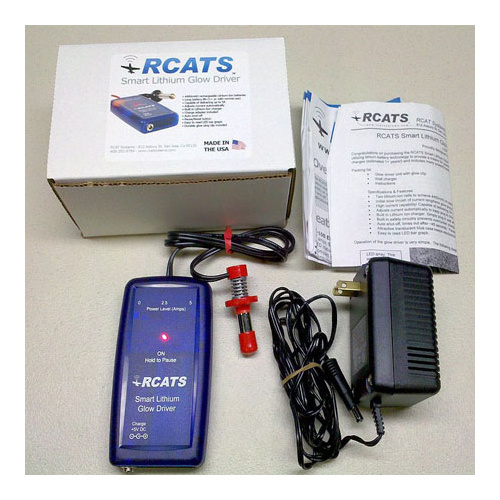
RCATS smart Lithium glow driver (expensive but is the best ever glow driver I have seen).For competition use 4. Gang of 2 DuraCell D Cells in parallel.used for bench testing only. Fredvon4 wrote:There is always the option to down load the original Ray-O-vac or Ever-Ready outer cover, print it, and make a single cell looking old skool battery but with modern chemistry inside. The inter web has many different schematics for constant volt or constant current regulators to keep a 1.5Vdc 2Vdc glow plug happy with any of the NiMH/LiPo/LIFE source voltages I am not hung up on nostalgia too much and really prefer these four different approaches to lighting off glow plugs: 1.
Hobbieco Deluxe Power Panel II driven by a 12Vdc 7Ahr to 9 Ahr lead acid battery.My BIG flight box 2. Cyclon 5Ahr 2Vdc primary cell with a long length of wire to drop the voltage slightly.My little flight box 3. RCATS smart Lithium glow driver (expensive but is the best ever glow driver I have seen).For competition use 4. Gang of 2 DuraCell D Cells in parallel.used for bench testing only I have the same configuration as the No 1 above except that my battery inside my starterbox is a 2Ahr rechargeable lead acid one that conveniently sits inside the box saharing the space with a confusing mess of field gear like propellers, fuel syringes, a larger starter motor, COX wrenches and screwdrivers, after-run oil and brake-disc cleaner spray to undust my engine should an unplanned landing occur, etc that I would rather not show here.
I had had all the frustration of the world before I built this up, with the D-type batteries getting weak too soon, rechargeables not giving out more than 1,2Volts while COX heads run on 1,5Volts, and now the Hobbyco panel combines everything I need in the field, and need to recharge the battery only every second month or so.(even my old COX plugs not wanting to glow on standard 1,5V alkaline batteries anymore could be brought back to service thanks to the variable glow current output from the panel). You can also get a handheld glow driver, and a lot less to carry around. The RCATS lipo driver is perhaps the best, but you have very similar technology in the smaller Lipo driver from Dynamite RC. With a regulated output you have full power independent on the charge left in the battery (until it is all gone of course).
I have shown this comparison before when this never ending (?) battery question comes up. Below you have pictures that show the power from a NiMh driver/battery compared to the Dynamite one. Fredvon4 wrote: I had had all the frustration of the world before I built this up, with the D-type batteries getting weak too soon, rechargeables not giving out more than 1,2Volts while COX heads run on 1,5Volts, and now the Hobbyco panel combines everything I need in the field, and need to recharge the battery only every second month or so.(even my old COX plugs not wanting to glow on standard 1,5V alkaline batteries anymore could be brought back to service thanks to the variable glow current output from the panel). So with the Hobbico panel can one adjust the glow current in tenths of a volt like 1.5V, 1.6V, 1.7V etc.? Fredvon4 wrote: I had had all the frustration of the world before I built this up, with the D-type batteries getting weak too soon, rechargeables not giving out more than 1,2Volts while COX heads run on 1,5Volts, and now the Hobbyco panel combines everything I need in the field, and need to recharge the battery only every second month or so.(even my old COX plugs not wanting to glow on standard 1,5V alkaline batteries anymore could be brought back to service thanks to the variable glow current output from the panel). So with the Hobbico panel can one adjust the glow current in tenths of a volt like 1.5V, 1.6V, 1.7V etc.?
The voltage at the glow plug outlet is 12VDC but the output current is intermittent and the knob on the panel allows you to set the intermittent current to meet either a standard 1,2V glow plug or COX 1,5V glow head. Sig Skyray wrote:For a Cox.049, are you guys using the glow plug adapters that accept the insert-type glow plugs that then take the glow drivers? Don't know what you call those types of plugs but their the one's used in the larger RC plane engines. Rat9000, I can't tell you whether it is a DuBro, Veco or what clip. I bought it 40 years ago, came with twin stranded wires and factory spades on one end and 1.5V bell battery lugs on the other. Then it was nice and shiny with galvanized finished steel.
As time went on, those wires were well worn and needed replacement, so I used 16 gauge auto wire and crimp connectors. After all these years it is still my favourite clip.
I can use it on engines from.020 to.65+. The battery holder is a reworked Radio Shack one where I drilled out their rivets and rewired the cells in parallel. Being light duty it cracked then broke, now held together with wire ties. I may later go to soldering 4 Alkaline D-cells together.